Amla Powder vs Fresh Amla: Which Is Better?
Amla, the Indian gooseberry (Emblica officinalis), is one of the most respected fruits in Ayurveda. It sits at the centre of classic formulations like Chyawanprash and Triphala, and it has been part of Indian kitchens and home remedies for centuries. But when you actually want to bring amla into your daily routine, you face a simple, practical question: do you reach for the fresh fruit when it is in season, or do you keep a jar of amla powder on the shelf all year round?
The honest answer is that neither is universally better. Fresh amla and amla powder are the same fruit in different forms, and each one wins on different counts. Fresh fruit is harder to find outside winter and harder to use every day. Powder is convenient and consistent but goes through processing. This guide breaks down how they compare on nutrients, shelf life, dosage, taste and real daily use, so you can choose what genuinely fits your life rather than what sounds best on paper.
Fresh Amla and Amla Powder: What Each One Actually Is
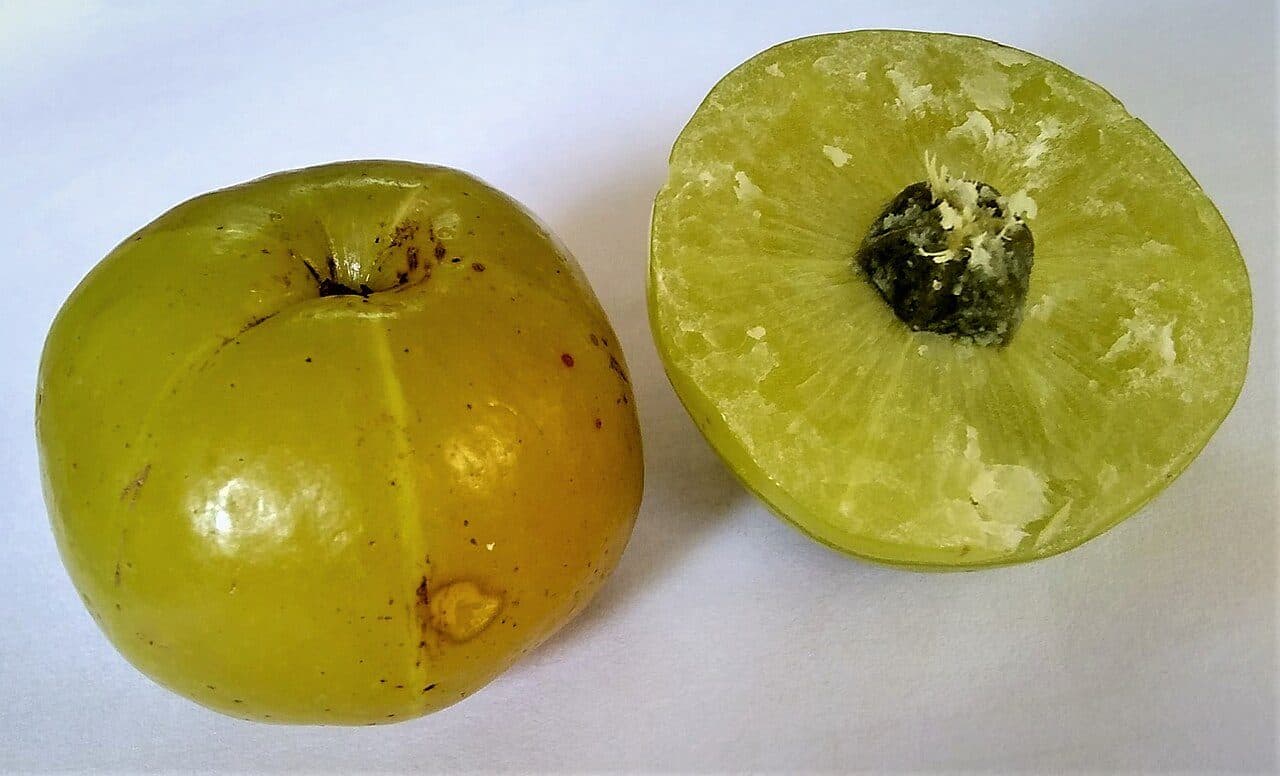
Fresh amla is the whole, raw fruit. It is roughly the size of a small lime, pale green to yellow-green, with a hard stone in the centre. It is intensely sour, slightly bitter and astringent, and it leaves a sweet aftertaste once you sip water. In India it is mostly available from October through February, with peak supply in winter. Outside that window you may only find it pickled, frozen or candied.
Amla powder is made by washing the fruit, deseeding it, slicing or pulping it, drying it, and then grinding it into a fine powder. The drying step is the most important part of the process. Good powder is dried at low temperatures, often shade-dried or dried at carefully controlled heat, so that more of the heat-sensitive compounds survive. Cheaper powder is dried fast and hot, which is quicker and cheaper but strips away much of what makes amla valuable. This single difference explains why two jars of amla powder can vary so much in colour, smell and potency.
Nutrient Comparison: Vitamin C and Antioxidants
Amla is best known for its vitamin C content and its antioxidant compounds, especially tannins like emblicanin. Fresh amla is genuinely rich in vitamin C, and importantly, the tannins in the fruit help protect that vitamin C from breaking down quickly. This is why amla is often described as more stable than you would expect for such a vitamin-C-heavy fruit.
When fresh amla is dried into powder, two things happen at once. The water content drops dramatically, which concentrates the remaining nutrients gram for gram. At the same time, heat and air exposure during drying and storage gradually reduce some of the more delicate compounds, including a portion of the vitamin C. The net result depends almost entirely on how the powder was made and stored.
- Fresh amla: highest vitamin C in its natural, undamaged state, but you have to eat it soon after buying and it is only seasonal.
- Well-made amla powder: concentrated nutrients per gram and good antioxidant retention when dried gently and stored away from heat and light.
- Poorly made amla powder: faded colour, flat smell and noticeably weaker, because high-heat drying and long shelf time degrade the active compounds.
A quick quality check: good amla powder is pale greenish-brown to khaki, smells sour and earthy, and is finely milled. If a powder looks grey or very dark brown and smells of almost nothing, it has likely been over-processed or has sat too long, and much of its value is gone.
Shelf Life and Convenience
This is where the two forms diverge most sharply, and for most people it is the deciding factor. Fresh amla is highly perishable. At room temperature it stays good for only a few days, and even in the refrigerator it usually lasts around one to two weeks before it starts to soften and lose quality. It is also seasonal, so for much of the year fresh fruit simply is not on the shelf.
Amla powder, by contrast, is built for the long haul. Stored properly in an airtight container, away from sunlight, heat and moisture, a good powder keeps its quality for around 12 months. That means you can take a consistent daily amount in June just as easily as in December, without depending on the harvest or on a vegetable vendor.
Convenience matters because consistency is what actually produces results in any wellness routine. A spoon of powder stirred into water takes seconds. Sourcing, washing and chopping fresh fruit every single day is realistic for very few people. For most households, the form they will actually use every day is the one that fits a busy morning, and that is usually powder.
Taste and Daily Experience
There is no getting around it: amla is sour and astringent in both forms. Fresh fruit delivers a sharp, mouth-puckering sourness that many people find hard to eat plain, which is why it is traditionally salted, made into murabba (a sweet preserve) or turned into pickle and candy. The upside of fresh fruit is that you also get the fibre of the whole fruit and the satisfying ritual of eating it.
Powder is more forgiving because you control the dose and the medium. A teaspoon dissolved in warm water is tangy but manageable, and you can soften it further with a little honey, blend it into a smoothie, or mix it into curd or buttermilk. Powder also disappears easily into food, so people who dislike the taste of the raw fruit often find the powder far easier to keep up with over months.
Fresh amla wins the nutrition headline, but the form you take every day without fail is the one that actually supports your health.
How to Use Each Form
Using Fresh Amla
- 1Eat it raw in small pieces with a pinch of salt to take the edge off the sourness, ideally on an empty stomach in the morning.
- 2Grate it into salads, chutneys or raita to add a bright sour note without eating it plain.
- 3Steam or lightly boil the fruit, then mash and mix with honey or jaggery if the raw sourness is too strong.
- 4Make fresh amla juice by deseeding, blending with water and straining; start with a small quantity diluted in more water.
Using Amla Powder
- 1Stir 3 to 5 g, about one teaspoon, into a glass of warm or room-temperature water and drink it first thing in the morning on an empty stomach.
- 2Add a teaspoon to a fruit smoothie or a glass of buttermilk to mask the tartness while keeping the benefits.
- 3Mix it with a little honey into a paste if you prefer to take it directly, followed by water.
- 4For hair care, blend the powder with water or curd into a paste for a traditional scalp and hair application, kept separate from your edible portion.
A practical daily approach: 3 to 5 g (about 1 teaspoon) of amla powder once a day in water is a sensible starting amount for most adults. Begin at the lower end, see how your body responds, and stay consistent rather than taking large amounts occasionally.
Cost and Year-Round Availability
During winter in India, fresh amla is cheap and abundant in local markets, which makes it attractive for those few months. The problem is the rest of the year. Out of season, fresh fruit is expensive, hard to find, or only available in processed forms like pickle and candy that carry added salt or sugar. Powder solves the availability problem entirely: you buy once and have a steady supply for months, at a predictable cost per serving.
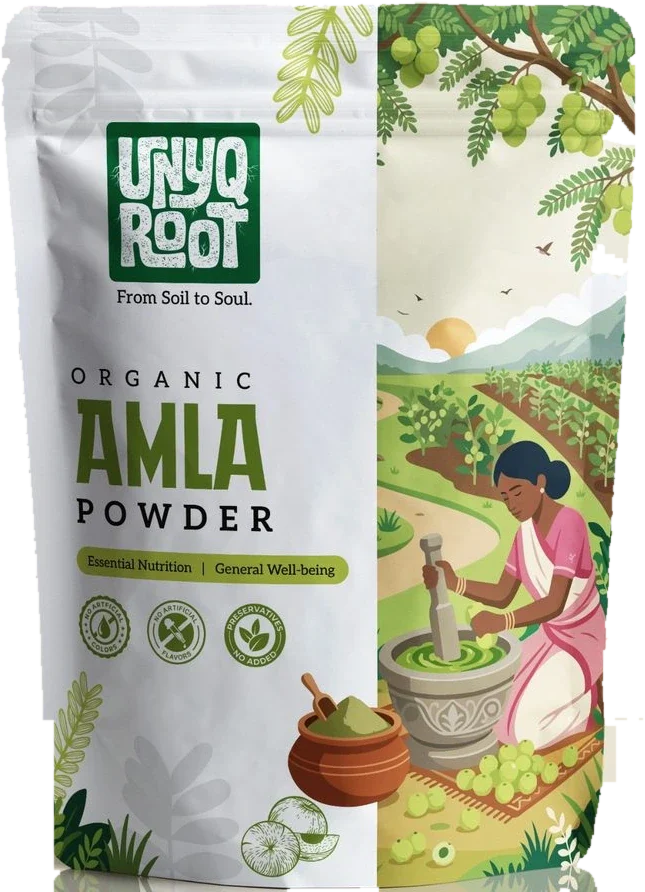
When you choose powder, source matters more than price alone. Look for powder made from properly ripened fruit, gently dried, and ideally certified organic so you avoid pesticide residues on a fruit you take daily. UNYQROOT Amla powder is made from organically grown fruit and milled to retain its natural colour and tartness, which is exactly what you want from a daily-use powder. A clean, single-ingredient powder with no fillers is always the better long-term choice.
So Which Is Better for You?
Choose fresh amla if it is in season, you can buy it regularly, and you enjoy or do not mind the strong sour taste. You get the fruit in its most natural state along with its fibre, and there is a certain satisfaction in eating the whole thing. It is a fine seasonal habit for anyone with easy access to good fresh fruit.
Choose amla powder if you want something you can take every single day, all year, without sourcing fresh fruit. It stores well, the dose is easy to control, it blends into food and drinks, and a well-made organic powder retains a strong nutrient profile. For the majority of people building a long-term routine, powder is simply the more realistic and consistent option, and consistency is what matters most.
Many people use both: fresh fruit in winter when it is at its best, and a quality powder for the rest of the year so the routine never breaks. There is no need to treat it as a strict either-or decision.
Safety and Sensible Use
Amla is a food and a gentle daily tonic in Ayurveda, and for most healthy adults the amounts described here are well within everyday use. That said, it is sour and astringent, so very large amounts can be hard on a sensitive stomach. Start small, keep your daily intake moderate, and drink enough water through the day.
If you are pregnant, nursing, managing a health condition, or taking any medication, including blood-thinners or medicines for blood sugar, please consult a qualified physician or Ayurvedic practitioner before adding amla powder or large amounts of fresh amla to your routine. This article is for general wellness information and is not a substitute for personal medical advice.
Bring Amla into your routine
View productFrequently asked
A well-made, gently dried amla powder retains most of the fruit's value and is concentrated per gram, though fresh fruit has the highest vitamin C in its natural state. For everyday consistency, good-quality powder is the more practical choice for most people.