Ashwagandha Powder vs Capsules
Ashwagandha (Withania somnifera) is one of the most relied-upon herbs in Ayurveda, valued for centuries as a rasayana, a rejuvenating tonic traditionally taken to support calm, steady energy and restful sleep. Today it reaches your shelf in two common shapes: a loose churna (powder) you stir into milk or water, and a pre-measured capsule you swallow with a sip. Both can come from the same well-grown, sun-dried root. The difference is in how they fit your routine, your palate and your day.
If you have stood in front of a shelf wondering which one to buy, this guide walks through the honest trade-offs, from dosage and absorption to taste, cost and convenience, so you can pick the form you will actually use every day. Consistency matters far more than the format, because ashwagandha is a herb that rewards steady, daily use over weeks rather than a single dramatic dose.
First, What Is Inside Each Form?
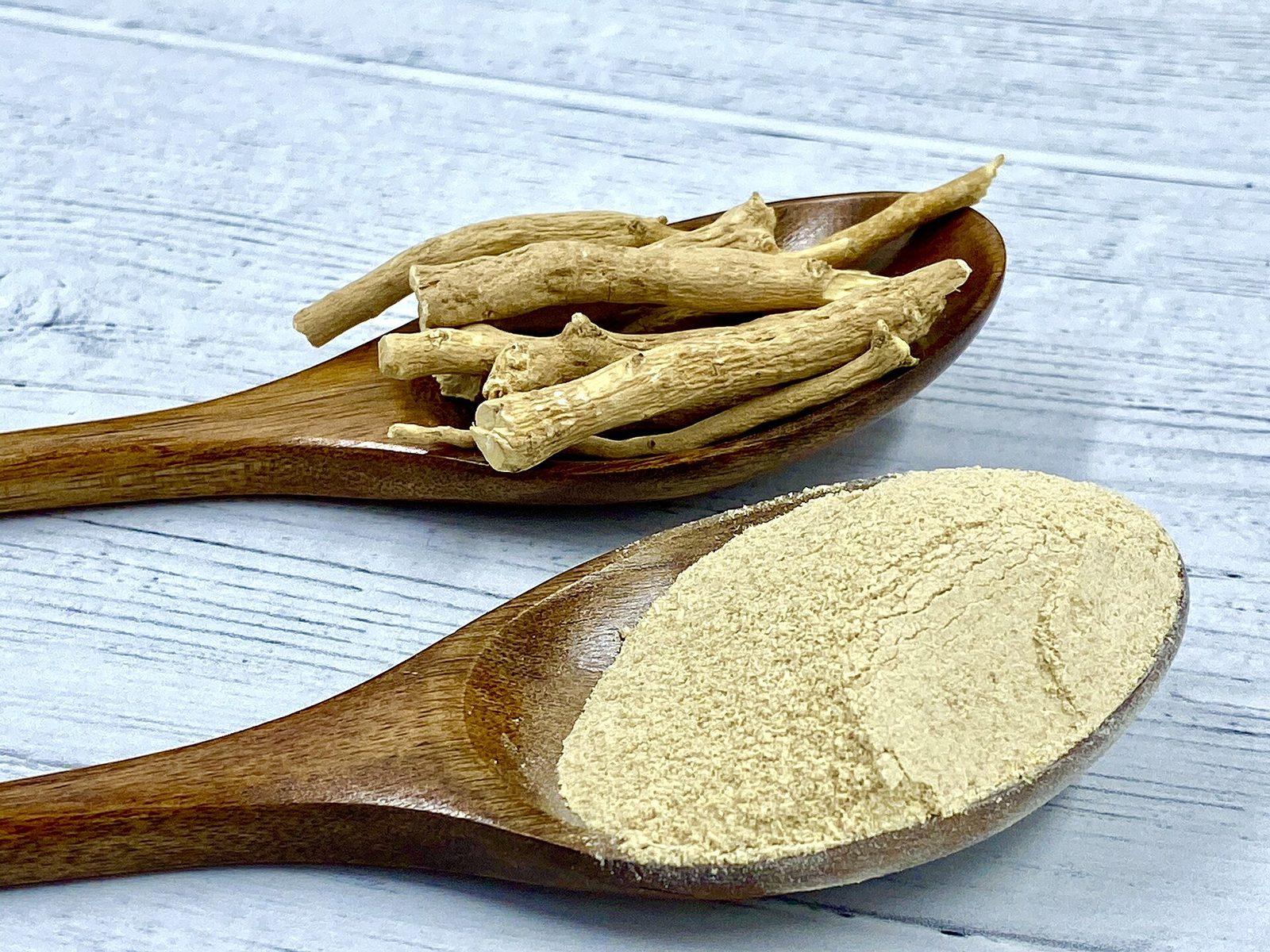
Traditional ashwagandha powder is simply the dried root, cleaned and milled into a fine churna. Nothing is added or removed. A capsule typically contains either that same milled root powder or a standardised root extract pressed into a vegetarian shell. The shell is usually plant-based cellulose (HPMC) rather than gelatin in vegetarian products, which matters if you follow a vegetarian or vegan diet.
This is the single most important distinction to understand before comparing the two: a root powder and a root extract are not the same strength gram for gram. Whole root powder reflects the herb in its natural concentration, the way Ayurvedic texts describe it. An extract concentrates specific compounds called withanolides, so a small capsule can carry the active equivalent of a larger spoon of plain powder. Always read the label to see whether you are buying whole root or a standardised extract, because it changes how much you need to take.
Quick label check: "whole root powder" means take it by the spoon (grams). "Root extract standardised to X percent withanolides" means take it by the capsule (milligrams). Comparing the two by weight alone will mislead you.
Dosage and Timing: How Much, and When
For traditional whole root powder, a common supportive range is 3 to 5 grams per day, which is roughly half to one level teaspoon. Many people split this into two smaller servings, one in the morning and one before bed, or take the full amount at night when the goal is restful sleep. The classic Ayurvedic preparation is to simmer the powder gently in warm milk, often with a little honey or jaggery, which softens the earthy taste and suits the herb's warming nature.
Capsules remove the guesswork. A standardised root extract capsule is often 300 to 600 mg, taken once or twice daily with water, frequently after food. Because the dose is fixed and printed on the pack, you take the same amount every time without a measuring spoon. This precision is the main practical reason people choose capsules.
- Powder, supportive daily range: about 3 to 5 g (half to one teaspoon), often warmed in milk.
- Extract capsule, typical serving: 300 to 600 mg of standardised root extract, once or twice a day.
- Best general timing: with or just after a meal to be gentle on the stomach; an evening dose suits sleep and calm.
- Give it time: most people use ashwagandha consistently for several weeks before judging how it suits them.
If you are pregnant, nursing, managing a thyroid condition, or taking prescription medication (especially sedatives, thyroid medicine or immunosuppressants), speak with your physician or an Ayurvedic practitioner before starting ashwagandha in any form.
Absorption: Does One Work Better Than the Other?
This is the question shoppers ask most, and the honest answer is that both forms can be well absorbed. What differs is the delivery. Ashwagandha's key compounds are fat-friendly, which is exactly why the traditional method pairs the powder with warm milk or ghee. The fat helps carry the withanolides, and warming the mixture follows the Ayurvedic principle of taking this warming herb in a warming base. Taken this way, powder is not a poor cousin to capsules; it is the classical, time-tested route.
Capsules, particularly those using a standardised extract, deliver a concentrated, consistent amount of withanolides in a small dose. If you swallow a capsule with water on its own, you skip the fat pairing, though many people simply take it around a meal that already contains some fat. For most people the practical difference in everyday results is small. The form you take reliably, in the right amount, tends to matter more than fine differences in absorption.
The best form of ashwagandha is the one you will still be taking three weeks from now.
Taste, Texture and the Daily Experience
Ashwagandha is named in part for its smell; the root has a distinct, earthy, slightly horse-like aroma, which is bracing the first time you meet it. This is where many people make their decision. Powder carries that full taste. Stirred into warm milk with honey, cardamom or a pinch of nutmeg, it becomes a comforting bedtime drink that a lot of people grow to enjoy. Stirred into plain water, it is an acquired taste.
Capsules bypass the flavour entirely. You swallow and move on, which is a genuine advantage for anyone who dislikes the earthiness or wants to take it discreetly at the office or while travelling. If taste is the thing standing between you and a daily habit, capsules quietly solve it.
Flexibility: Where Powder Wins
Powder is the more versatile format, and this is its real strength. You control the dose to the gram, scaling up or down as a practitioner advises. You can blend it into preparations a capsule cannot match.
- Warm moon milk: simmer half a teaspoon in milk with a little honey before bed.
- Morning blend: stir into a smoothie, oats or a date-and-nut shake where the flavour disappears.
- Custom mixes: combine with other supportive churnas under guidance, which a fixed capsule cannot do.
- Adjustable dose: start with a smaller pinch and build up gradually as you get used to it.
If you enjoy the ritual of making something warm and intentional at the end of a busy day, powder turns a supplement into a small act of self-care. UNYQROOT's ashwagandha root powder is milled from organically grown, sun-dried roots specifically for this kind of daily ritual, so the base material is as honest as the practice.
Convenience: Where Capsules Win
Capsules are built for a life on the move. There is no spoon, no milk, no mixing and no mess. You carry the bottle in a bag, take one with water after lunch, and the dose is identical every single day. For frequent travellers, busy parents and anyone who simply wants the benefit without the preparation, this reliability is hard to beat.
Capsules also win on portability and shelf discipline. There is no open jar of powder slowly drawing moisture in a humid Indian kitchen, and no risk of clumping during the monsoon. If your honest self-assessment is that an unmeasured jar will sit unused while a simple bottle gets taken daily, that is a strong reason to choose capsules.
Cost and Value
Gram for gram of plain root, powder is usually the more economical choice, because you are paying for the milled herb without the extra processing of extraction and encapsulation. A jar lasts a long time when you use half a teaspoon a day, which makes it the value pick for steady, long-term users.
Capsules cost more per serving, and that premium pays for convenience, a fixed dose and, in the case of standardised products, a concentrated and consistent level of withanolides. Whether that premium is worth it depends entirely on whether the convenience is what keeps you consistent. A slightly pricier capsule you take daily beats a cheaper powder you abandon after a week.
How to Choose: A Simple Decision Guide
Run through these questions honestly and the right form usually becomes obvious.
- 1Do you enjoy a warm bedtime drink and the ritual of preparing it? Lean towards powder.
- 2Do you dislike earthy flavours or need to take it discreetly? Lean towards capsules.
- 3Do you travel often or keep an unpredictable schedule? Capsules travel better.
- 4Do you want to adjust your dose or blend it into food and smoothies? Powder is more flexible.
- 5Is per-serving cost your main concern for long-term daily use? Powder is usually cheaper.
- 6Are you most worried you simply will not stay consistent? Pick whichever you genuinely look forward to taking.
Some people keep both: powder for an evening milk at home and a small bottle of capsules for travel and busy days. There is no rule against using the form that fits the moment, as long as your total daily intake stays within a sensible supportive range and you are not unknowingly doubling up.
What to Look For When You Buy, Whatever the Form
Quality matters more than format. Ashwagandha is a root, and roots draw up whatever is in the soil, so sourcing and testing are not optional details.
- Root, not leaf: traditional rasayana use is rooted in the root; look for products that specify root.
- Clear origin and organic growing practices, so you know how the herb was cultivated.
- Heavy-metal and contaminant testing, which is especially important for any root-based herb.
- An honest label: whole root powder stated in grams, or extract stated in milligrams with its withanolide percentage.
- Sensible packaging, an airtight jar for powder and a moisture-protected bottle for capsules.
UNYQROOT applies the same soil-to-soul standard across both formats, the same organically grown roots whether you choose the loose powder for your nightly milk or prefer the simplicity of a measured capsule. The form is your choice; the quality of the root should never be the variable.
The Bottom Line
There is no universally better form of ashwagandha. Powder offers tradition, flexibility, value and a calming ritual, at the cost of taste and a little daily effort. Capsules offer precision, portability and zero flavour, at a higher price per serving. Both, taken consistently in a sensible amount, support the calm, steady energy people seek from this herb. Choose the one that fits your real life, give it a few patient weeks, and, if anything about your health is uncertain, check in with your physician or Ayurvedic practitioner first.
Bring Ashwagandha into your routine
View productFrequently asked
Both can work well. Whole root powder taken in warm milk follows the classical Ayurvedic method, while standardised extract capsules deliver a precise, concentrated dose. The difference in everyday results is usually small. Consistent daily use in a sensible amount matters more than the format you pick.