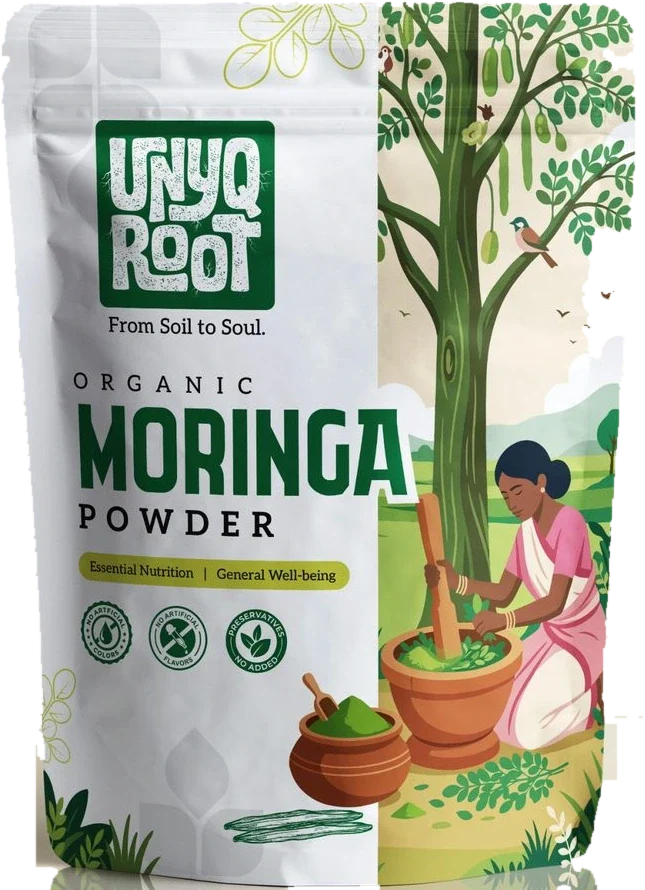
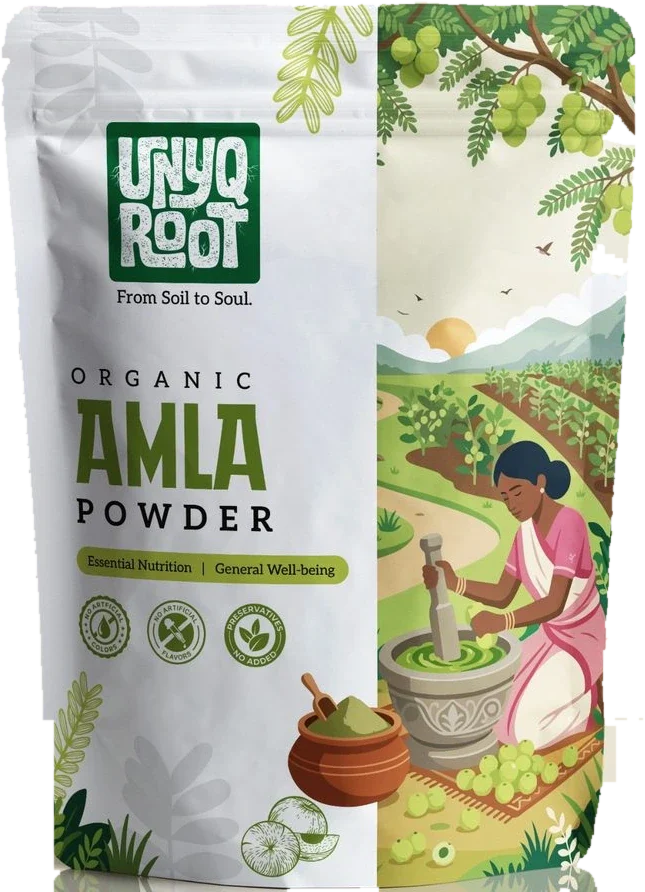
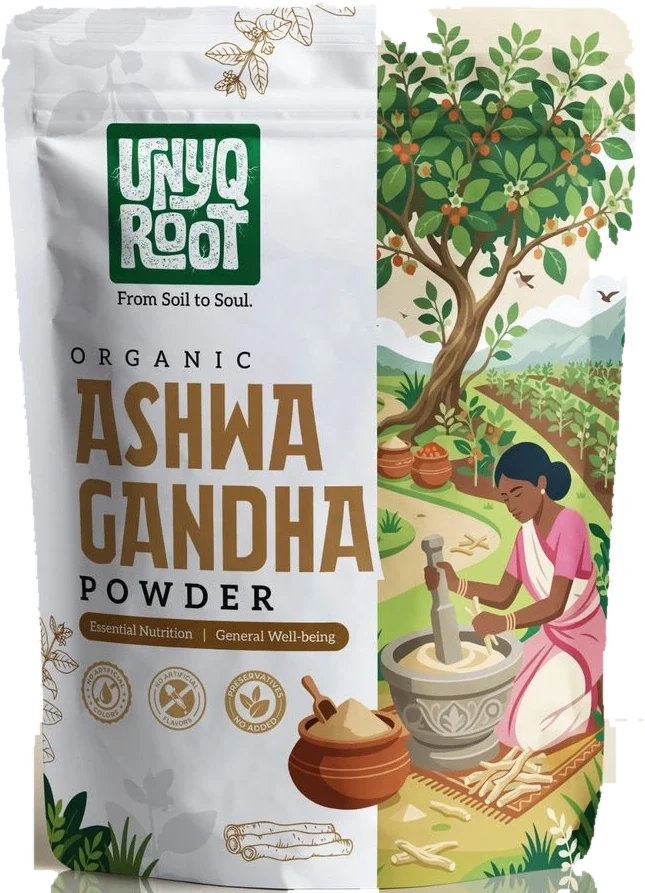
Moringa Powder for Natural Energy and Immunity
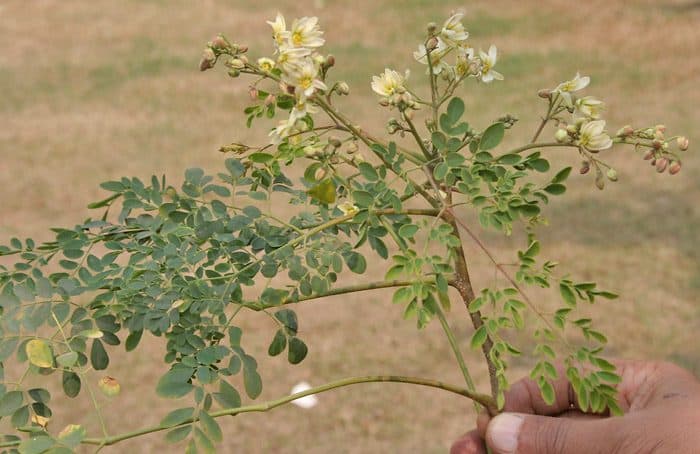
Moringa oleifera grows quietly across much of India, from kitchen-garden hedges in Tamil Nadu to dryland farms in Rajasthan. The drumstick tree is so ordinary in many homes that we forget its leaves are one of the most nutrient-dense foods grown on Indian soil. Dried and milled, those leaves become a fine green powder that has earned a steady place in modern wellness routines, usually for two reasons: a calmer kind of daily energy, and broader support for the body's everyday defences.
This is not a story about a miracle cure. Moringa is a food first and a supplement second, and the honest case for it rests on real nutrition rather than hype. In this guide we look at what moringa powder actually contains, why it tends to help with energy and immunity, how much to take and when, how to use it without ruining the taste, and who should be careful. Where it matters, we keep the framing where it belongs: support for a healthy routine, not a replacement for medical care.
What is moringa powder?
Moringa powder is made from the dried leaves of the Moringa oleifera tree, shade-dried to protect colour and nutrients, then ground to a fine powder. Good moringa is a deep, fresh green with a grassy, slightly peppery smell. A dull khaki colour or a flat, hay-like aroma usually points to heat damage or old stock, both of which reduce the nutrient value you are paying for.
Because the leaf is the part used, moringa powder is closer to a concentrated leafy vegetable than to a typical capsule supplement. That distinction matters. It means moringa delivers a spread of nutrients in their natural food form rather than a single isolated compound, which is part of why it sits so comfortably in a daily diet.
The nutrition behind the energy and immunity claims
Most of what people feel from moringa traces back to its nutrient density. Dried moringa leaf is a meaningful source of several vitamins and minerals that the body relies on for energy production and immune function. A typical 1-teaspoon serving (around 3 grams) is small, but it stacks well alongside a normal diet.
- Iron and folate: both are central to making healthy red blood cells, which carry oxygen to your muscles and brain. Low iron is one of the most common reasons people feel persistently tired, especially women in India.
- Vitamin C and vitamin A: two nutrients tied closely to normal immune defence and to the health of skin and mucous membranes, the body's first physical barriers.
- Vitamin B2 (riboflavin) and other B-group vitamins: these act as helpers in the chemical reactions that release energy from the food you eat.
- Calcium, magnesium and potassium: minerals that support muscle function, nerve signalling and overall steadiness through the day.
- Plant protein and antioxidants: moringa leaf contains all nine essential amino acids in modest amounts, plus polyphenols and flavonoids that help the body manage everyday oxidative stress.
None of these nutrients is exotic. The value of moringa is that it brings several of them together in a single spoonful of a green food, which is why it reads as nourishment rather than stimulation.
Why moringa supports steady energy, not a jittery spike
Coffee gives you a sharp lift and an equally sharp dip. Moringa works differently, and that difference is the whole point. It contains no caffeine. Instead of pushing your nervous system, it supplies raw materials the body needs to make energy on its own: iron and folate for oxygen-carrying red blood cells, B vitamins for the metabolic steps that turn food into usable fuel, and magnesium for normal muscle and nerve function.
The result, for many people, is a more even kind of energy. There is no crash to manage and no afternoon slump caused by the supplement itself, because moringa is filling a nutritional gap rather than borrowing energy from later in the day. This is also why moringa pairs well with morning routines and why it does not tend to interfere with sleep when taken earlier in the day.
Moringa does not give you energy the way a stimulant does. It gives your body the materials to produce its own.
How moringa supports everyday immunity
Your immune system runs on nutrients. Vitamins A and C, along with minerals like iron and zinc, are part of how immune cells form, function and recover. When the diet is short on these for long stretches, normal defences can run less smoothly. Moringa helps by topping up several of these nutrients at once, in food form.
The antioxidant compounds in moringa leaf, including flavonoids and polyphenols, also help the body cope with routine oxidative stress from pollution, irregular meals, poor sleep and a busy urban life. Think of this as background support for a system that is always working, rather than a switch you flip when you feel a cold coming on.
It is worth being clear here: moringa supports the immune system as part of a healthy diet. It does not prevent, treat or cure infections or illness. If you are unwell, see a doctor.
How much moringa powder should you take?
Start low and build slowly. A sensible daily range for moringa leaf powder is roughly 3 to 5 grams, which is about half a teaspoon to one slightly heaped teaspoon. Beginners do best starting at half a teaspoon for the first week, then moving up once they know how their digestion responds.
- 1Week 1: Half a teaspoon (about 1.5 to 2 grams) once a day, taken with or just after a meal.
- 2Week 2 onwards: Build up to one teaspoon (about 3 grams) a day if you feel comfortable.
- 3Optional: Some people use up to 5 grams a day, split across two smaller servings to keep the taste mild and digestion easy.
- 4Consistency beats dose: a steady teaspoon every day for several weeks does more than an occasional large amount.
Tip: Always take moringa with food, not on an empty stomach. The fat in a meal helps your body absorb the fat-soluble vitamins (A and E), and a full stomach prevents the mild nausea or loose stools some people notice when they start too high, too fast.
The best time to take moringa
There is no single correct time, but timing can shape what you get from it. For the energy benefit, morning works best. A teaspoon stirred into breakfast or a mid-morning drink sets a steady tone for the day and avoids any chance of it feeling activating close to bedtime.
If your main goal is general nourishment and immune support rather than energy, the exact time matters less. The one rule that holds across goals is to take it with a meal. If you are taking 5 grams, splitting it between breakfast and lunch keeps each serving gentle on the stomach and on the palate.
Easy ways to use moringa powder
Moringa has a green, grassy taste with a slightly bitter, peppery edge. On its own in plain water it can be a hard sell. Blended into the right foods, it disappears almost completely. Here are reliable ways to use it that an Indian kitchen already has the ingredients for.
- Smoothies: blend one teaspoon with banana, curd or milk, and a date or two. The fruit and dairy mask the bitterness almost entirely.
- Warm (not boiling) water with lemon and honey: a simple morning drink. Let the water cool slightly first, since very high heat can degrade some nutrients.
- Dals, sabzis and soups: stir a teaspoon into the dish at the very end of cooking, off the heat, so it warms through without being boiled hard.
- Buttermilk or chaas: whisk in half a teaspoon with a little roasted jeera and salt for a savoury, cooling drink.
- Rotis or theplas: knead a teaspoon into the dough for a subtle green lift to everyday flatbreads.
The simplest approach is to add moringa to food you already eat rather than building a new ritual around it. A routine you can keep is the one that actually works.
What to look for in a quality moringa powder
Moringa is only as good as the leaf and the processing behind it. Two powders at the same price can be very different products. A few markers separate the good from the ordinary.
- Colour and smell: a vivid, fresh green and a clean grassy aroma signal careful drying. Dull brown-green and a stale smell suggest heat damage or age.
- Shade-dried, not heat-dried: lower-temperature drying protects vitamin C and other heat-sensitive nutrients.
- Pure leaf, single ingredient: no fillers, no added colour, no stems padding out the weight.
- Sourcing and certification: organic cultivation and transparent sourcing reduce the risk of pesticide residue, which matters in a leaf you eat daily.
- Sensible packaging: an opaque, resealable pack keeps light and moisture out and the powder fresh for longer.
This is the standard we hold ourselves to at UNYQROOT. Our moringa powder is made from shade-dried, organically grown leaves, milled fine and packed to keep that fresh-green character intact, so the spoonful you take carries the nutrition you are actually looking for.
Safety, side effects and who should be careful
For most healthy adults, moringa leaf powder is well tolerated in food-level amounts. Because it is a food, the cautions are mostly about dosage and a few specific situations rather than danger in normal use.
- Start low to avoid mild digestive upset. Beginning at too high a dose can cause loose stools or a slightly unsettled stomach; this usually settles when you reduce the amount.
- Use the leaf powder, not the root or bark. Moringa root and bark contain compounds that are not considered safe to consume; reputable powders use leaf only.
- Pregnancy and breastfeeding: avoid moringa supplements during pregnancy unless your doctor approves, and check before use while nursing.
- On medication: if you take medicines for blood sugar, blood pressure or thyroid, or blood thinners, speak to your doctor first, as moringa may interact with how some of these work.
- Existing health conditions: anyone managing a chronic condition should treat moringa as something to clear with a qualified physician before adding it daily.
If you are pregnant, nursing, managing a health condition or taking any prescription medication, talk to your doctor or a qualified Ayurvedic practitioner before adding moringa to your routine. This article is for general wellness information, not medical advice.
How long before you notice anything?
Moringa is not a switch. Because it works by improving day-to-day nutrition, the changes most people report, steadier energy, fewer mid-afternoon dips, a general sense of feeling more resourced, tend to show up over two to four weeks of consistent use rather than overnight. The honest expectation is gradual and cumulative, the way good nutrition usually feels.
Give it a fair trial. Take a teaspoon a day with food for a month, keep the rest of your routine reasonably steady so you can read the effect, and notice how your energy and recovery feel across the day. From soil to soul, the real value of moringa is in the quiet consistency of a daily green food, not in a single dramatic moment.
Moringa ને તમારી દિનચર્યામાં ઉમેરો
ઉત્પાદન જુઓવારંવાર પૂછાતા પ્રશ્નો
For most healthy adults, about 3 to 5 grams a day, which is roughly half a teaspoon to one teaspoon. Start at half a teaspoon for the first week, then build up. Always take it with food.