How to Use Moringa Powder Every Day
Moringa is one of those plants most Indian households already know without thinking of it as a supplement. The drumstick tree, sahjan, has stood in backyards and along field edges for generations, and its pods have flavoured countless sambars and dals. What is newer is the habit of drying its leaves into a fine green powder and taking a measured spoon of it each day. Done well, it is one of the simplest ways to add steady plant nutrition to meals you already eat.
This guide is about the everyday practice: how much moringa powder to use, when to take it, what to mix it into so it actually tastes good, and how to build the habit so it survives past the first enthusiastic week. The aim is plain and useful, not a list of grand promises. Moringa is food first, and treating it that way is the surest path to keeping it in your routine.
What moringa powder actually is
Moringa powder is made from the dried, ground leaves of Moringa oleifera. The leaves are harvested, shade-dried at low temperature to protect their colour and nutrients, and milled into a soft green powder. Good powder smells faintly grassy and earthy, a little like matcha with a vegetal edge, and the colour should be a deep, living green rather than a dull khaki. A grey or brownish tint usually means heat damage or age.
By weight, dried moringa leaf is genuinely nutrient-dense. It carries plant protein, fibre, iron, calcium, potassium, vitamin A precursors, vitamin C, and a range of antioxidant compounds. That density is exactly why a small daily spoon is enough, and why moringa is best understood as a concentrated leafy green you can keep in a jar rather than a pill.
Think of moringa powder as a shelf-stable serving of greens. One level teaspoon is roughly a small handful of fresh leaves, which is why the daily amount stays modest.
How much to take each day
For most healthy adults, a sensible daily amount is 3 to 5 grams of moringa powder, which is about half a teaspoon to one slightly heaped teaspoon. If you are completely new to it, start lower. Begin with around half a teaspoon (roughly 1.5 to 2 grams) for the first week so your digestion can adjust, then move up to a full teaspoon if it agrees with you.
- Starting out: about half a teaspoon (1.5 to 2 g) once a day for 5 to 7 days.
- Comfortable daily use: 1 teaspoon (3 to 5 g) once a day, or split into two smaller servings.
- Upper everyday range: most people do well staying at or below 1 to 1.5 teaspoons total per day.
More is not better here. Moringa leaf is mildly cleansing for the digestive tract, and a large first dose can leave some people feeling loose or a bit windy. A modest, consistent spoon every day does far more for you than an occasional big scoop. Treat it like adding a vegetable to your plate, not like a medicine you take in heroic quantities.
If you are pregnant, nursing, managing a thyroid or blood-sugar condition, or taking regular medication, speak with your physician before adding moringa powder to your daily routine. It is a food, but it is a concentrated one, and a quick check is sensible.
The best time of day to take moringa
There is no single perfect hour, but timing can shape how you feel. Many people prefer moringa in the morning, taken with or just after breakfast. The leaf carries a gentle, steady energy rather than the sharp lift of caffeine, so a morning serving suits people who want to feel awake and settled through the first half of the day.
Taking it with food, rather than on a completely empty stomach, is the kinder choice for most people. Food softens its cleansing effect and helps your body absorb its fat-soluble nutrients, especially the vitamin A precursors, which travel better alongside a little fat such as ghee, milk, nuts, or seeds. If mornings are rushed, an afternoon serving works just as well.
Two small notes on timing. Because moringa is lightly energising for some, taking a large serving very late in the evening occasionally makes it harder to wind down, so keep the evening portion small if you take one. And if you are using it specifically to add greens to a meal, simply take it with that meal and stop overthinking the clock.
What to mix moringa powder into
Moringa has a green, slightly bitter, spinach-like taste. On its own in water it can feel a little sharp, so the trick to daily use is pairing it with flavours that carry it. The good news is that it blends into both sweet and savoury foods, which makes it easy to slot into an Indian kitchen.
Easy everyday pairings
- Warm water with lemon and a little honey, stirred well, for a simple morning drink.
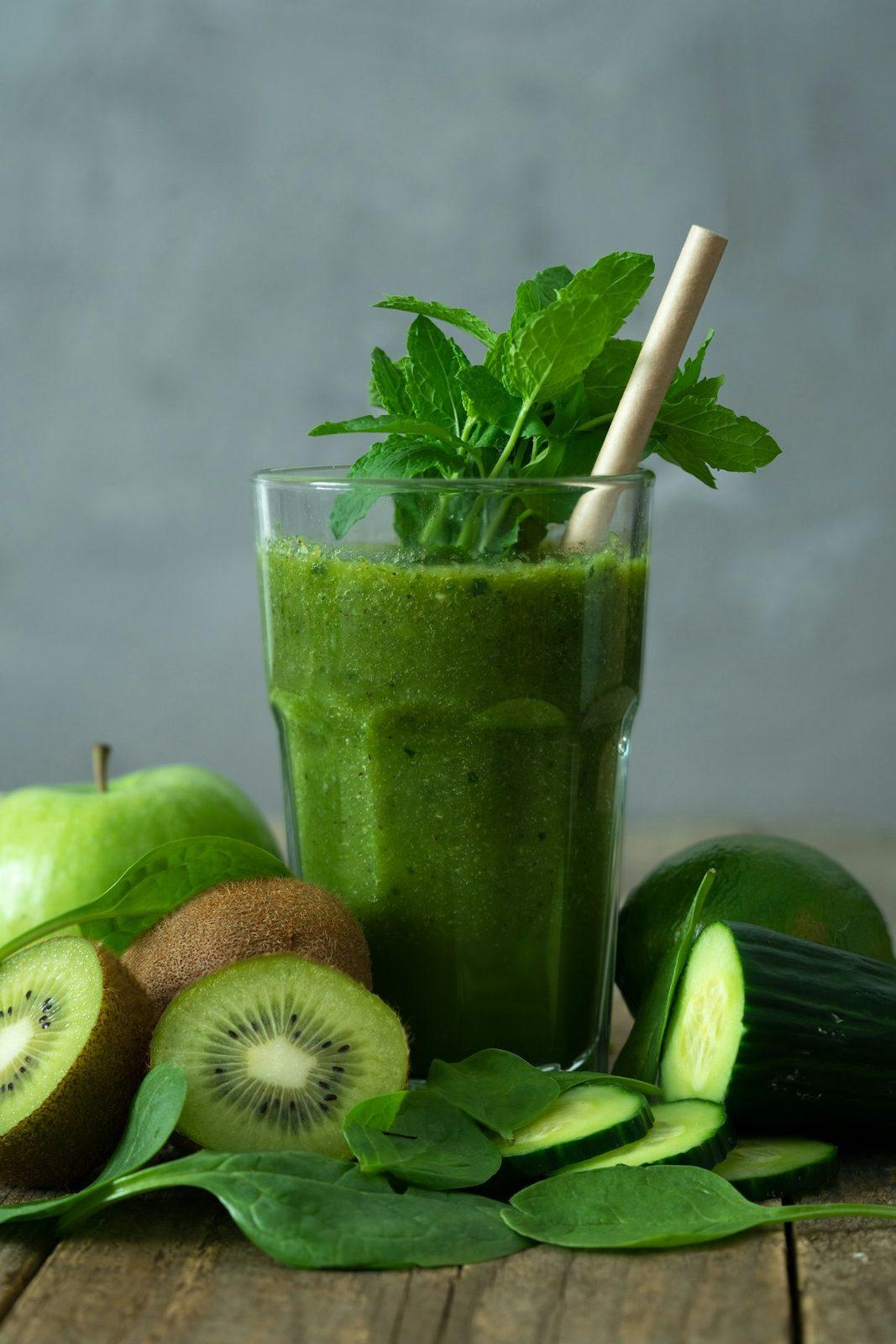
- A smoothie with banana, curd or milk, and a date or two to round off the bitterness.
- Buttermilk (chaas) with a pinch of roasted jeera and salt, which masks the bitterness beautifully.
- Stirred into dal, sambar, or vegetable curry at the end of cooking, off the heat.
- Folded into the dough for theplas, parathas, or chillas for a green-flecked, savoury flatbread.
- Whisked into a salad dressing with olive oil, lemon, and salt.
If you add moringa to hot food, stir it in after you turn off the flame. Prolonged boiling dulls its colour and degrades some of the heat-sensitive vitamins. The same logic applies to tea or coffee: let the drink cool slightly from a rolling boil before you mix the powder in.
The best way to take moringa is whatever way you will actually repeat tomorrow. Consistency beats intensity every time.
Three simple daily recipes
These are built to be fast, forgiving, and friendly to Indian tastes. Each uses about one teaspoon of moringa powder, so you get a full daily serving in a single preparation.
Morning moringa tonic
- 1Heat a glass of water until warm, not boiling, then let it sit for a minute.
- 2Add 1 teaspoon of moringa powder and stir for 20 to 30 seconds until evenly mixed.
- 3Squeeze in half a lemon and add half a teaspoon of honey to taste.
- 4Stir again and drink while warm, ideally with or just after breakfast.
Green banana smoothie
- 1Blend 1 ripe banana, half a cup of curd or milk, and half a cup of water.
- 2Add 1 teaspoon of moringa powder and a soaked date for natural sweetness.
- 3Add a few soaked almonds or a teaspoon of flax for a little healthy fat.
- 4Blend until smooth and drink fresh, as moringa is best taken soon after mixing.
Moringa chaas
- 1Whisk half a cup of curd with one and a half cups of water until smooth.
- 2Add 1 teaspoon of moringa powder, a pinch of salt, and roasted cumin powder.
- 3Throw in chopped coriander or a few curry leaves if you have them.
- 4Whisk well and serve cool with lunch on a warm afternoon.
How to build the daily habit
The hardest part of any supplement is not the first day, it is the thirtieth. Moringa rewards steady use, so a little structure helps it stick. The most reliable approach is to attach it to something you already do without fail, such as your morning chai, your post-lunch buttermilk, or the breakfast you make for the family anyway.
- 1Keep the jar visible. Store it next to the kettle or the blender, not hidden in a cupboard.
- 2Pre-decide your method. Choose one drink or dish so you are not improvising each morning.
- 3Use the same spoon. A dedicated teaspoon kept with the jar makes dosing automatic.
- 4Start small and stay regular. A daily half teaspoon beats a sporadic full one.
- 5Give it a few weeks. Subtle wellness habits show their value over time, not overnight.
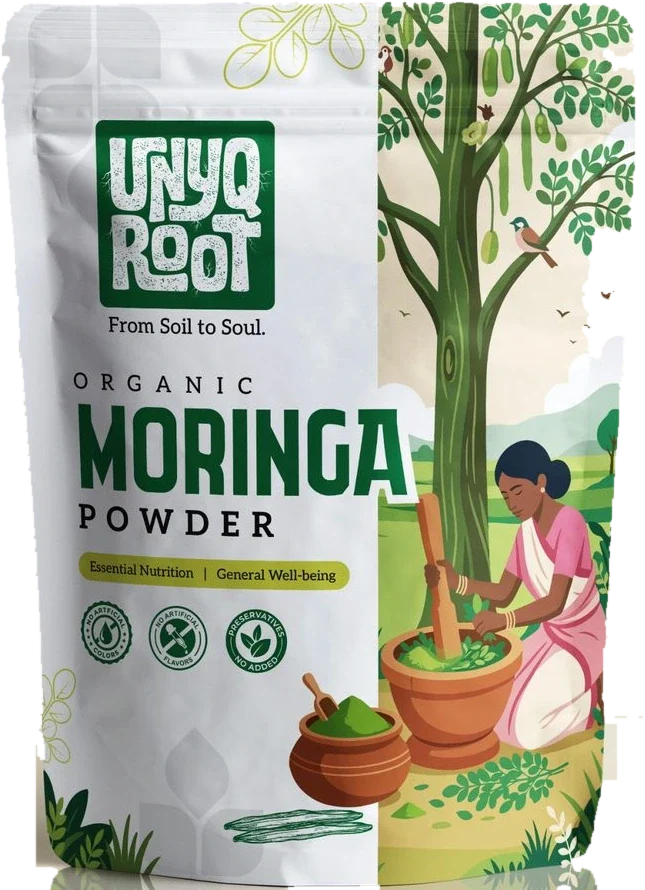
UNYQROOT moringa is dried and milled with this kind of daily ritual in mind, with the leaf processed gently to keep its green colour and its full leafy character. Treat the jar as a kitchen staple rather than a once-in-a-while purchase, and the habit tends to look after itself.
Storage so your powder stays fresh
Moringa is a dried leaf, so its enemies are the usual ones: heat, light, air, and moisture. Indian kitchens get warm and humid, especially through the monsoon, so a little care keeps the powder vivid and potent for longer.
- Keep it in an airtight container, away from the stove and direct sunlight.
- Use a dry spoon every time, since damp spoons introduce moisture that leads to clumping.
- Close the lid promptly so the powder is not left open to humid air.
- Aim to finish an opened pack within a few months, while the green is still bright.
If the powder ever smells stale, turns dull brown, or clumps into hard lumps, retire it. Fresh moringa should always look and smell alive, with that clean, green, garden-leaf character.
Who should be cautious
Moringa is well tolerated by most people as a food, but a few situations call for extra care. If you are pregnant, it is wise to avoid concentrated moringa preparations and to take medical advice first, since traditional texts treat the plant cautiously during pregnancy. If you are nursing, on thyroid or diabetes medication, or on blood thinners, check with your physician, because moringa is nutrient-rich and may interact with how some treatments are managed.
When you start, listen to your body. A little extra movement in digestion in the first few days is common and usually settles as your system adjusts. If you feel persistently uncomfortable, lower the amount or pause and reintroduce it more slowly. As with any addition to your diet, moderation and consistency matter more than chasing a larger dose.
Used simply and steadily, a daily teaspoon of moringa is one of the easiest ways to bring more plant nutrition into food you already enjoy. Pick one method from this guide, keep it within reach, and let the habit do its quiet work.
Moringa को अपनी दिनचर्या में शामिल करें
उत्पाद देखेंअक्सर पूछे जाने वाले प्रश्न
For most healthy adults, 3 to 5 grams a day, which is about half to one teaspoon. Start at half a teaspoon for the first week, then build up gradually if it agrees with you.