Moringa: A Complete Plant-Nutrition Guide
Moringa oleifera grows across most of India, from kitchen-garden boundaries in Tamil Nadu to roadside hedges in the north, where it is known simply as the drumstick tree. The long green pods go into sambar; the small round leaves are stir-fried with grated coconut or folded into dal. What modern nutrition labs have measured is roughly what generations of South Indian cooks already understood: the leaf is one of the more nutrient-dense greens a plant can offer, gram for gram.
This guide looks at moringa the way a careful eater would. What is actually in the dried leaf powder, in real numbers. How much is sensible to take in a day, and when. Where the genuine benefits sit, and where the internet has wandered into exaggeration. The aim is a clear, usable picture rather than a list of superlatives.
What moringa actually is
The plant is a fast-growing, drought-hardy tree native to the foothills of the Himalayas and now cultivated throughout the tropics. Almost every part is edible: the immature pods (drumsticks), the flowers, the seeds, and the leaves. For nutrition purposes, the leaf is the part that matters most, and dried leaf powder is the form most people buy because it concentrates the nutrients and keeps for months.
It helps to be precise about which moringa you mean. Drumstick pods, the kind in your sambar, are mostly fibre and water with modest vitamin C. Moringa leaf powder is a different proposition entirely, and it is the leaf that the nutrition claims refer to. When this article says moringa, it means the dried leaf powder unless stated otherwise.
The nutrition profile, in real numbers
Nutrient figures for moringa leaf powder vary with soil, harvest, and drying method, so treat these as a representative range rather than a fixed label. Per 100 grams of dried leaf powder, published analyses typically report:
- Protein: around 25 to 30 grams, with a fairly complete spread of essential amino acids for a plant source
- Calcium: roughly 1,500 to 2,000 mg, several times that of an equal weight of milk solids
- Iron: around 25 to 30 mg, mostly non-haem (plant) iron
- Potassium: in the region of 1,300 to 1,500 mg
- Vitamin A (as beta-carotene): a substantial source, often cited in the thousands of micrograms RAE
- Vitamin C: present but reduced by drying, typically tens of milligrams
- Fibre: around 19 to 25 grams, plus a range of polyphenols and flavonoids such as quercetin and chlorogenic acid
Those 100-gram figures look dramatic, and that is exactly where people get misled. Nobody eats 100 grams of leaf powder. A realistic daily serving is 3 to 5 grams, about one level teaspoon. So divide every headline number by twenty or more to get the amount you would genuinely consume in a day.
Reality check: a 5 g teaspoon of moringa powder gives you roughly 1.3 g of protein, around 90 mg of calcium, and a little over 1 mg of iron. Useful as a daily top-up, not a replacement for a balanced plate.
Why the protein and amino acids matter
Most leafy greens are low in protein. Moringa is unusual in carrying a meaningful amount, and more importantly a reasonably balanced amino acid profile that includes the essential ones our bodies cannot make. For largely vegetarian Indian diets, where lysine can run short, a small daily addition of a complete-leaning plant protein is a sensible, low-effort habit.
Keep the proportions honest. A teaspoon contributes a little over a gram of protein, so moringa supports your protein intake rather than supplying it. Dal, paneer, eggs, and legumes still do the heavy lifting. Think of the leaf as a quiet contributor that also brings minerals and antioxidants along with that protein.
Iron and calcium: read the fine print
Moringa is often recommended for iron, and the leaf does carry a respectable amount. The catch is that plant iron is non-haem iron, which the body absorbs less efficiently than the iron in meat. You can improve absorption considerably by pairing moringa with vitamin C: a squeeze of lemon in the same meal, a tomato in the sabzi, or an amla-based drink alongside. Tea and coffee taken at the same time do the opposite, so leave a gap of an hour or so.
Calcium follows a similar logic. The leaf is genuinely calcium-rich, and unlike spinach it is comparatively low in oxalates, which means more of that calcium is likely to be usable. A daily teaspoon will not meet your full calcium requirement on its own, but it is a worthwhile addition to a plant-forward diet, particularly for those who avoid dairy.
Treat moringa as a daily mineral and antioxidant top-up that earns its place quietly, not as a single ingredient that fixes a diet on its own.
Antioxidants and the realistic benefits
Beyond the basic vitamins and minerals, moringa leaves carry a useful load of polyphenols and flavonoids, including quercetin, chlorogenic acid, and various carotenoids. These plant compounds are why moringa scores well on antioxidant-capacity tests, and why much of the wellness interest centres on supporting the body's everyday handling of oxidative stress.
It is worth being clear about the state of the evidence. A good deal of moringa research is in cell cultures and animal studies, with a smaller, growing set of human trials. The honest summary is that moringa is a nutritious whole-food leaf with promising supportive properties, best framed as part of general wellness. It is not a treatment for any condition, and you should be wary of any source that claims otherwise.
How much to take, and when
For most healthy adults using moringa as a daily nutritional supplement, a sensible routine looks like this:
- 1Start small. Begin with 1 to 2 grams a day (roughly half a teaspoon) for the first week so your digestion adjusts.
- 2Build to a daily serving of 3 to 5 grams, about one level teaspoon, once you know it agrees with you.
- 3Take it with food. Stirring it into breakfast, a meal, or a post-meal drink improves tolerance and helps absorb the fat-soluble vitamins.
- 4Pair with vitamin C. A little lemon, tomato, or amla in the same meal helps your body take up the iron.
- 5Stay consistent rather than heavy. A steady teaspoon most days does more than an occasional large dose.
Morning is a popular time because the powder carries no caffeine yet many people find it gently energising as a routine. There is no strict rule; the best time is the one you will actually keep to every day. If you take it at night, mix it into something warm rather than a heavy meal.
If you are pregnant or nursing, or taking medication for blood sugar, blood pressure, or thyroid, speak with your physician before adding moringa. Moringa root and bark are not recommended in pregnancy; this guide refers only to the leaf, and medical guidance still applies.
Practical ways to use it every day
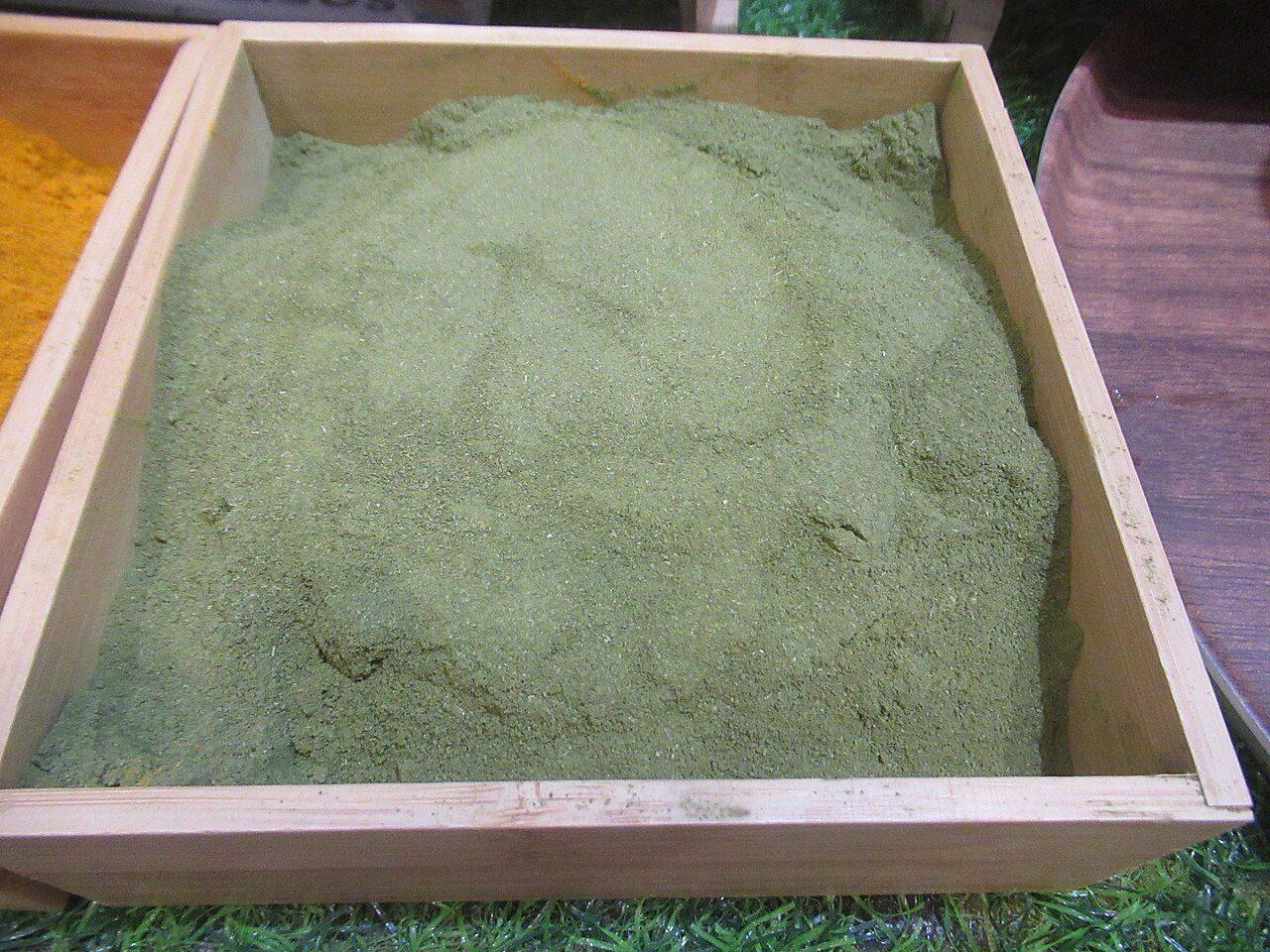
Good moringa leaf powder has a deep green colour and a fresh, grassy, slightly peppery smell. The flavour is earthy and a touch bitter, which is easy to balance. The simplest approaches tend to be the ones that last:
- Warm water with a teaspoon of powder, a little lemon, and honey, taken first thing in the morning
- Stirred into a fruit or curd-based smoothie, where banana or mango masks the bitterness completely
- Folded into dal, sambar, or a sabzi at the end of cooking, off the heat, to keep the heat-sensitive nutrients intact
- Whisked into buttermilk (chaas) with roasted cumin and a pinch of salt for a savoury version
- Sprinkled over upma, poha, or khichdi as a finishing green
One cooking note matters: add moringa powder at the end, not the start. Prolonged high heat degrades vitamin C and some of the antioxidants. Treating it like a fresh herb that goes in just before serving keeps more of the nutrition you are paying for.
Choosing a quality moringa
Moringa quality varies more than most people expect, and the difference shows up in colour, smell, and how it makes you feel. Powder that has been over-dried, stored poorly, or cut with stem and other plant matter looks dull and tastes flat. Because the leaf can also take up whatever is in its soil, sourcing and testing genuinely matter.
- Look for shade-dried or low-temperature dried leaf, which preserves colour and heat-sensitive nutrients
- Prefer a single-origin, organically grown source with clear farm provenance
- Check for third-party testing covering heavy metals and microbial safety
- Choose pure leaf powder with no fillers, sweeteners, or anti-caking agents
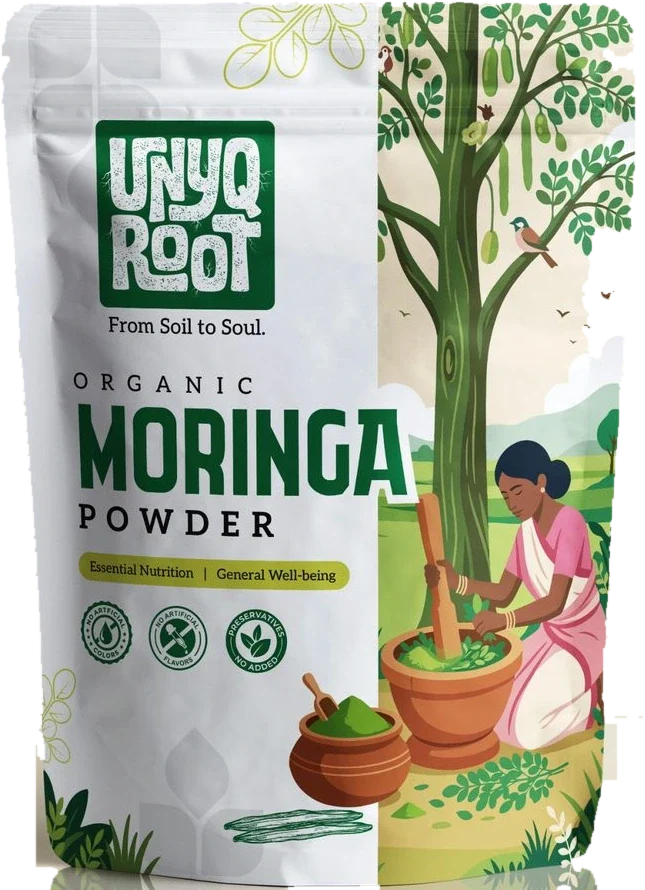
UNYQROOT's moringa is grown and shade-dried with this in mind, kept to pure leaf and batch-tested, which is the standard worth holding any moringa to. Store whatever you buy in an airtight container away from light and heat, and use it within a few months of opening so the green stays vivid and the nutrients stay intact.
Who should be cautious
Moringa leaf is well tolerated by most people, but a few groups should take care. Larger amounts can have a mild laxative effect, which is one more reason to start low. Because the leaf may gently influence blood sugar and blood pressure, anyone on medication for those, or for thyroid conditions, should get medical advice first. As noted, moringa root and bark are best avoided in pregnancy; pregnant and nursing women should consult their doctor even for the leaf. If you have a chronic condition or take regular medication, a brief word with your physician is always the safe path.
The bottom line
Moringa earns its reputation as a nutrient-dense leaf, but it works best when you hold it to realistic expectations. A daily teaspoon is a smart, low-effort way to add plant protein, minerals like calcium and iron, beta-carotene, and a useful spread of antioxidants to an already balanced diet. Take it with food, pair it with a little vitamin C, keep the amount modest and the habit steady, and choose a clean, well-sourced powder. Do that, and this old kitchen-garden tree quietly does exactly what it has always done, just measured this time.
Moringa ને તમારી દિનચર્યામાં ઉમેરો
ઉત્પાદન જુઓવારંવાર પૂછાતા પ્રશ્નો
For most healthy adults, 3 to 5 grams, about one level teaspoon, is a sensible daily amount. Start with half a teaspoon for the first week so your digestion adjusts, then build up. Consistency matters more than large doses.