The Best Time to Take Ashwagandha
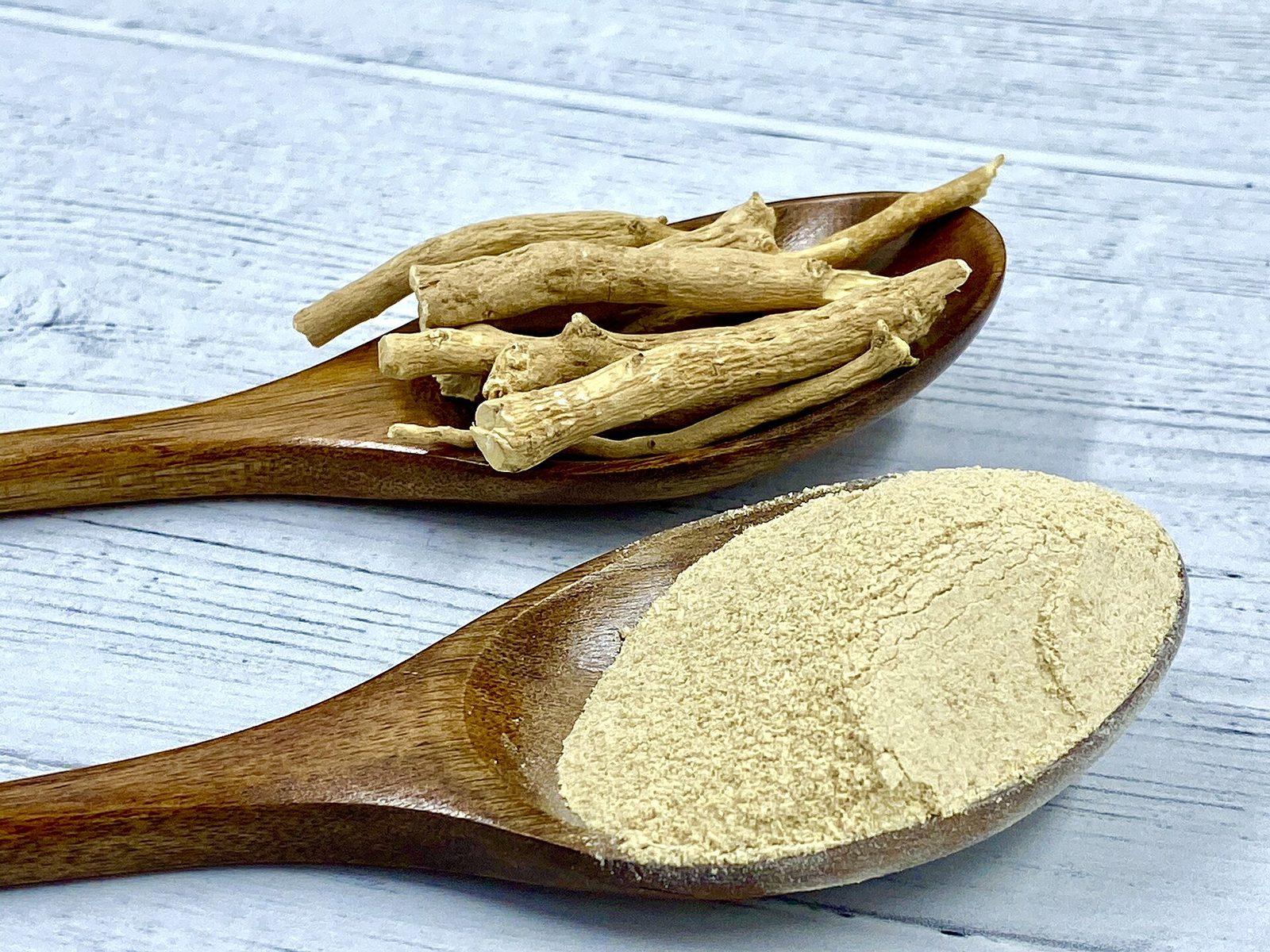
Ashwagandha is one of the most asked-about herbs in any Ayurvedic kitchen, and the question that comes up most often is not whether to take it, but when. Morning or night? Before food or after? With water or warm milk? The honest answer is that timing matters less than consistency, but it does matter, and matching the time of day to what you actually want from the herb can make the difference between a routine you feel good about and one you quietly abandon after a week.
Ashwagandha (Withania somnifera, known in Ayurveda as a rasayana, or restorative tonic) is an adaptogen. That word simply means it helps the body adapt to everyday stress and find its own balance rather than pushing you in one fixed direction. Because of that two-way nature, the same root can feel grounding at night and steadying in the morning. This guide walks through the best time to take ashwagandha for different goals, how much to take, what to take it with, and how long to wait before you expect to notice anything.
Does the time of day actually matter?
For most people, the single biggest factor is taking ashwagandha every day at roughly the same time. Adaptogens work cumulatively. They are not a quick stimulant or a sedative you feel within twenty minutes; they support the body over weeks of steady use. So the best time, above everything else, is the time you will reliably remember.
That said, the herb's effects do lean in different directions depending on your goal. If you want help winding down and sleeping better, evening tends to suit most people. If you want steady daytime calm, focus, or support during a demanding stretch at work, morning often works well. Below, we break it down by what you are actually after.
Best time for sleep and winding down: evening
The botanical name somnifera comes from the Latin for sleep-inducing, and Ayurveda has long used ashwagandha at night to quiet a restless mind. If your main reason for taking it is to relax in the evening, fall asleep more easily, or recover from a stressful day, take it about 30 to 60 minutes before bed.
The classic and most pleasant way to do this in India is the moon-milk style preparation: warm milk with a small spoon of ashwagandha powder, sometimes with a pinch of nutmeg or cardamom and a little jaggery or honey. Warm milk on its own is calming, and the herb folds into it naturally. If you avoid dairy, warm water or a plant milk works too, though the taste of the raw root is earthy and slightly bitter, so a little honey helps.
Evening ritual: stir 3 to 5 g (about 1 teaspoon) of ashwagandha powder into a cup of warm milk, add a pinch of cardamom, and drink it 30 to 60 minutes before bed. Keep your phone away while it cools. The pause matters as much as the herb.
Best time for daytime calm and focus: morning
If your goal is steady, level energy through the day rather than sleep, the morning is a good slot. Taken with breakfast, ashwagandha can support a calmer baseline through busy hours without the jittery edge of caffeine. Many people who deal with a demanding commute, long screen hours, or simply a noisy schedule prefer this timing because it sets the tone before the day's pressures arrive.
Note that ashwagandha is not a stimulant. It will not give you a buzz the way coffee does. What people more often describe is the absence of the afternoon crash and a sense of being less rattled by small things. If you drink chai or coffee, there is no need to give it up. You can have your usual cup and take ashwagandha with your meal separately.
Twice a day: a balanced approach
Many traditional protocols and modern routines split the dose into two: once in the morning and once in the evening. This keeps a steadier level of the herb in your system across the day and is a sensible default if you are not sure which single time suits you. A common split is a smaller dose with breakfast and a slightly larger one before bed.
- 1Morning: half a teaspoon (about 1.5 to 2 g) of powder, or one capsule, taken with breakfast.
- 2Evening: half to one teaspoon (about 2 to 3 g) of powder in warm milk, 30 to 60 minutes before bed.
- 3Keep the total within roughly 3 to 6 g of powder per day unless a qualified practitioner advises otherwise.
Should you take ashwagandha with or without food?
Take ashwagandha with or just after food, or with milk. The root is warming and can feel a little harsh on an empty stomach for some people, occasionally causing mild nausea or a heavy feeling. Pairing it with a meal, milk, or even a spoon of ghee softens that and fits the Ayurvedic view of the herb as nourishing rather than purely functional.
In Ayurveda, ashwagandha is traditionally taken with an anupana, a carrier that helps it work. Warm milk is the most common carrier and is considered grounding. Ghee, honey (never heated to high temperatures), or simply warm water are also used. Pick whatever you will enjoy, because a routine you like is a routine you keep.
The best time to take ashwagandha is the time you will not forget. Consistency, not perfect scheduling, is what lets an adaptogen do its quiet work.
How much ashwagandha should you take?
For powder (churna), a typical daily amount is 3 to 6 g, which is roughly 1 to 2 teaspoons, taken once or split across the day. If you are starting out, begin at the lower end, around half a teaspoon, and let your body settle before building up over a week or two. There is no benefit to rushing the amount; more is not better with adaptogens.
- Powder: 3 to 6 g per day, ideally with milk or food.
- Capsules or extracts: follow the strength on the label, since concentrated extracts use far smaller amounts than raw powder.
- Beginners: start low (around 1.5 to 2 g) for the first week, then increase gradually.
- Consistency: aim for the same time daily and give it a fair run before judging.
Quality matters as much as timing. UNYQROOT ashwagandha is sourced as whole organic root and milled in small batches so the powder carries the full earthiness of the plant. A clean, single-origin root means you know exactly what is going into your warm milk each night.
How long before you notice anything?
Give it time. Some people feel a gentle settling within the first week or two, particularly with evening use and sleep. For the deeper, steadying effects that ashwagandha is known for, most people need to take it consistently for about 4 to 8 weeks. Ayurveda treats rasayana herbs as a slow nourishment, not a switch you flip.
A practical way to track it is to note, before you start, how you sleep and how you handle a stressful day. Revisit those notes after six weeks rather than checking daily. The change is usually something you notice in hindsight: less reactive, sleeping through more often, steadier afternoons.
A simple weekly routine to follow
- 1Pick one goal first: better sleep (go evening) or steadier days (go morning).
- 2Choose your carrier: warm milk for evening, breakfast or water for morning.
- 3Start with half a teaspoon and stay there for a week.
- 4Increase to one teaspoon if you are comfortable, keeping daily total within 3 to 6 g.
- 5Keep it at the same time each day for at least 6 to 8 weeks.
- 6Review how you feel against where you started, then adjust.
Safety and when to check with a doctor
Ashwagandha is well tolerated by most healthy adults when taken at normal food-level amounts. Still, it is a potent herb. If you are pregnant or nursing, ashwagandha is traditionally avoided, so do not take it without guidance. If you take medication, especially for thyroid, blood sugar, blood pressure, sedatives, or immune conditions, or if you have an existing health concern, speak with your physician or a qualified Ayurvedic practitioner before starting, since the herb can interact with some treatments.
A few mild effects to know about: taken on an empty stomach or in large amounts, ashwagandha can cause stomach upset or drowsiness. If you feel unusually sleepy in the daytime, shift your dose to the evening. As with any supplement, stop and seek advice if anything feels off. This article is for general wellness information and is not medical advice.
The bottom line
There is no single best time that suits everyone, but the rules of thumb are simple. Take ashwagandha in the evening for sleep and winding down, in the morning for steady daytime calm, or split it across both for balance. Always take it with milk or food, start low, and stay consistent for several weeks. Match the timing to your goal, pick a good-quality root you trust, and let the herb do its quiet, gradual work.
Ashwagandha को अपनी दिनचर्या में शामिल करें
उत्पाद देखेंअक्सर पूछे जाने वाले प्रश्न
Both work. Take it at night, about 30 to 60 minutes before bed, if your goal is better sleep and winding down. Take it in the morning with breakfast for steady daytime calm and focus. Many people split a small dose across both. Consistency at the same time each day matters more than the exact slot.