How to Use Triphala Powder Correctly
Triphala is one of the most relied-upon formulations in Ayurveda, and for good reason. The name simply means "three fruits": amalaki (amla), bibhitaki (baheda), and haritaki (harad). Ground together in roughly equal parts, these three dried fruits make a tart, slightly bitter brown powder that Indian households have kept on the shelf for generations. It is traditionally used as a gentle daily support for digestion and regularity.
Most people who do not see results from triphala are simply using it incorrectly: the wrong amount, the wrong time of day, or a stale powder that lost its potency months ago. This guide walks through how to use triphala powder properly, step by step, so you get the most from each spoonful. Throughout, we keep to wellness-support framing. Triphala is a food-grade herbal supplement, not a treatment for any medical condition.
What Triphala Powder Actually Is
Triphala is a churna, the Ayurvedic word for a finely milled powder of dried herbs. The classic blend uses the three fruits in equal proportion, though some traditional recipes weight haritaki more heavily. Each fruit is valued for a different quality: amla is prized for its natural vitamin C and antioxidant content, bibhitaki for its supportive action on the digestive tract, and haritaki for helping the bowels move comfortably. Together they are considered tridoshic in Ayurveda, meaning the blend is thought to be balancing for most body types rather than aggravating any single one.
The taste is honestly an acquired one. Triphala carries five of the six tastes recognised in Ayurveda, missing only salty, which is part of why it is regarded as so well-rounded. Expect sour and astringent notes up front with a bitter finish, and a faintly sweet aftertaste from the amla. If the powder tastes flat or has no astringency at all, it is likely old or poorly stored. A fresh triphala should make your mouth pucker slightly; that drying, astringent quality is the sign you are getting the real thing rather than a faded, watered-down version.
How Much Triphala Powder Should You Take?
For most healthy adults, a typical daily amount of triphala powder is 3 to 5 grams, which is roughly half a teaspoon to one level teaspoon. It is sensible to start at the lower end, around 1 to 2 grams, for the first week so your digestion can adjust, then build up gradually if it suits you.
- Starting amount: 1–2 g (about a quarter to half a teaspoon) for the first 5–7 days.
- Maintenance amount: 3–5 g (half to one full teaspoon) per day for general digestive support.
- Frequency: once daily is enough for most people; some split it into two smaller doses.
- With water: dissolve in roughly 100–200 ml of warm water rather than swallowing the dry powder.
More is not better. Taking too much triphala at once can simply loosen the bowels. If that happens, reduce your amount rather than abandoning it entirely.
The Best Time to Take Triphala
Timing changes what triphala does for you, which is one of the more interesting features of the blend. The two most common windows are at night before bed and in the morning on an empty stomach.
At night, before sleep
This is the most popular approach in India. Taken about 30 to 60 minutes after dinner, or right before bed, triphala is traditionally used to support a comfortable, complete bowel movement the next morning. If your main goal is gentle regularity, the evening dose is the one to try first.
In the morning, on an empty stomach
Taken first thing with warm water, 20 to 30 minutes before breakfast, triphala is more often used for general digestive tone and as an antioxidant-rich start to the day. People who find the evening dose too active sometimes prefer the morning routine, which tends to feel milder.
Whichever window you choose, consistency matters more than perfection. Triphala is traditionally taken as a daily ritual over weeks, not as a one-off. Give any routine at least two to four weeks before judging how it suits you. A practical tip: take it at the same time each day so it becomes automatic, the way you might brush your teeth. Pairing the dose with an existing habit, such as right after dinner or just before your evening wind-down, makes it far easier to stick with than relying on memory alone.
How to Prepare Triphala Powder: Step by Step
The classic preparation is simple, and warm water makes the powder far easier to take than dry spoonfuls. Here is the standard method.
- 1Boil water and let it cool until it is warm but comfortable to drink, not scalding.
- 2Measure 3–5 g (about half to one teaspoon) of triphala powder into a cup.
- 3Pour in 100–200 ml of the warm water.
- 4Stir well. The powder will not fully dissolve; some sediment is normal and fine to drink.
- 5Drink it down in one go, or sip over a few minutes. Rinse the cup with a little extra water and drink that too so none is wasted.
- 6Optionally, stir in a quarter teaspoon of honey once the water has cooled to lukewarm, which softens the taste.
Never add honey to hot water in Ayurveda. Honey is traditionally only mixed into water that is lukewarm or cooler. Wait for the cup to cool before sweetening.
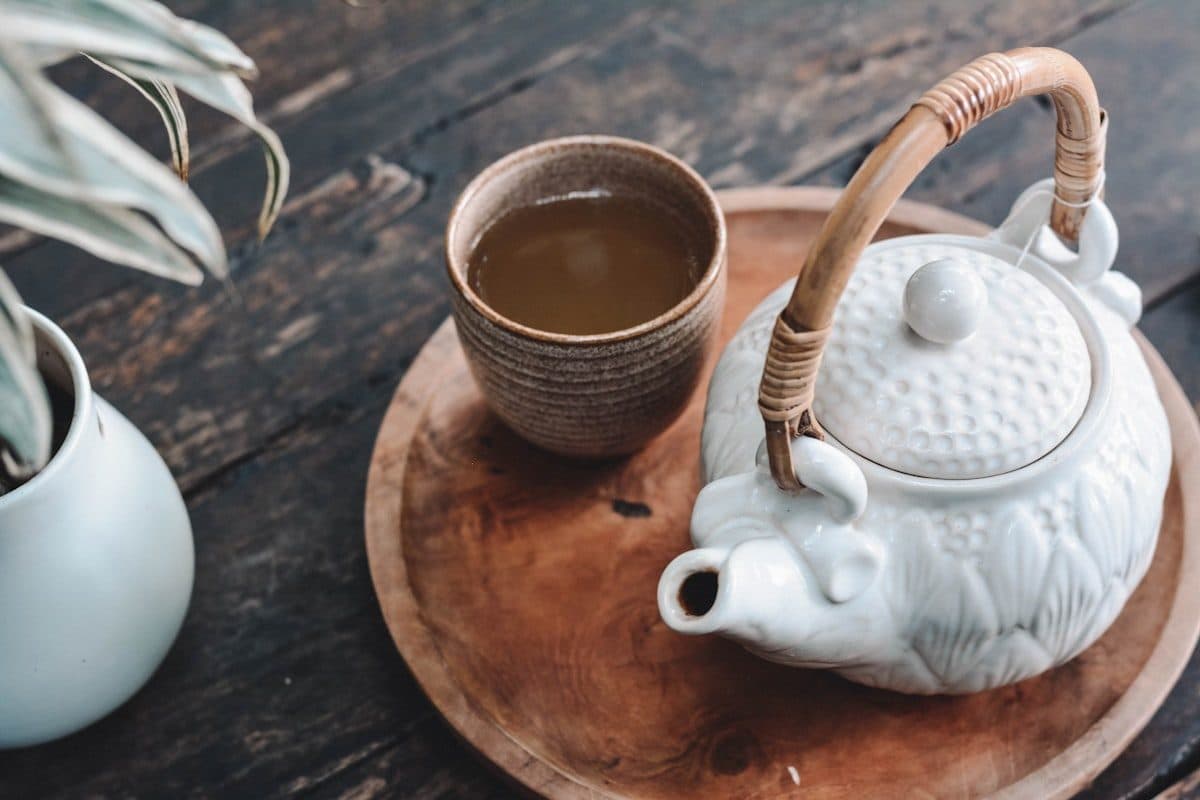
Triphala Tea (Decoction) Method
For a smoother, less gritty experience, many people make a triphala decoction, known as triphala kwath. This extracts the herbs into the water and leaves the heavy sediment behind.
- 1Add 1 teaspoon of triphala powder to 2 cups (about 400 ml) of water in a small pan.
- 2Bring to a gentle boil, then simmer on low until the liquid reduces to roughly one cup.
- 3Turn off the heat and let it steep for 5 minutes.
- 4Strain through a fine sieve or muslin cloth into a cup.
- 5Drink warm. Add honey only after it cools to lukewarm if you want a little sweetness.
The decoction is gentler on the palate and a good option if you dislike the texture of stirred powder. It does take a few minutes longer to prepare, so many people reserve it for evenings.
Other Easy Ways to Take It
- With warm water and honey: the everyday standard, balancing the sour and bitter notes.
- With a little ghee: a small half teaspoon of warm ghee stirred in is a traditional pairing, especially in cooler weather.
- In a capsule: if the taste is a dealbreaker, fill empty vegetarian capsules, though you lose the benefit of tasting the herbs, which Ayurveda considers part of the effect.
- As an eyewash (triphala water): a long-standing traditional practice using cooled, finely strained, fully sediment-free decoction. Only attempt this with scrupulously clean preparation and after speaking to a qualified practitioner.
Triphala rewards patience. It is a daily companion, taken quietly over weeks, not a quick fix you reach for once and forget.
How to Choose and Store Triphala Powder
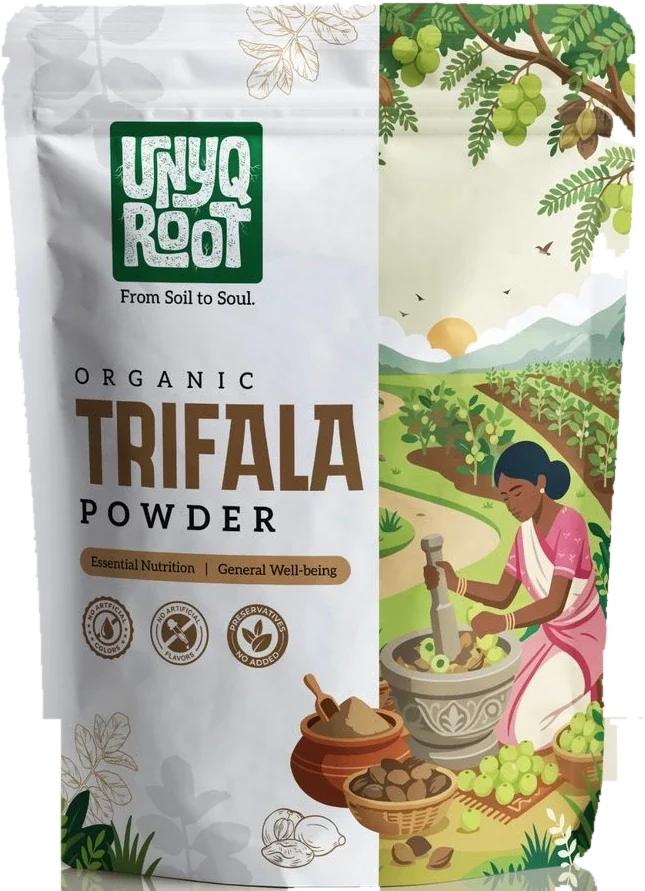
The quality of your powder decides almost everything. A good triphala is freshly milled, deep brown, fragrant in a tart and earthy way, and made from cleanly sourced fruit. A poor one is pale, smells of nothing, and has been sitting in a warehouse for a year. This is exactly why UNYQROOT mills its triphala in small batches from organically grown fruit, keeping the powder close to its harvest so the astringency and aroma are still intact when it reaches you.
- Look for organic, single-origin sourcing and a clear mill or pack date.
- Check that the only ingredients are amalaki, bibhitaki, and haritaki, with no fillers, sugar, or anti-caking agents.
- Store in an airtight, opaque container away from heat, light, and moisture.
- Keep a dry spoon for scooping; any moisture introduced will cause clumping and spoilage.
- Use within the recommended shelf window, typically several months once opened, for best potency.
Who Should Be Cautious
Triphala is generally well tolerated as a food-grade supplement, but it is not right for everyone, and it is not a substitute for medical care. Please speak to a doctor or a qualified Ayurvedic practitioner before starting, especially if any of the following apply to you.
- Pregnancy or breastfeeding: avoid unless specifically advised by your physician, as triphala can have a laxative action.
- On regular medication: triphala may affect how some medicines are absorbed, so confirm with your doctor, particularly if you take blood thinners or diabetes medication.
- Ongoing digestive conditions: if you live with chronic loose stools, IBS, or any diagnosed gut condition, get personalised advice first.
- Children: dosing for children differs and should only be set by a practitioner.
- Before surgery: discontinue and inform your doctor in line with their guidance.
If you experience cramping, excessive looseness, or any discomfort, reduce your amount or pause and consult a professional. Mild changes in bowel habits in the first few days are common as your system adjusts, but anything persistent or uncomfortable is a signal to stop and seek advice.
Putting It All Together
Using triphala correctly comes down to a few simple habits: a quality powder, a sensible amount of 3 to 5 grams, the right timing for your goal, and the patience to make it a daily ritual. Start small, dissolve it in warm water, keep it consistent, and store it well. Done this way, triphala becomes one of the quietest and most dependable parts of a daily wellness routine, true to the idea of caring for the body from soil to soul.
Triphala ને તમારી દિનચર્યામાં ઉમેરો
ઉત્પાદન જુઓવારંવાર પૂછાતા પ્રશ્નો
Yes, triphala is traditionally taken daily as a gentle wellness support. Most healthy adults use 3–5 g (about half to one teaspoon) once a day. Start at a lower amount for the first week and build up gradually. If you are pregnant, nursing, or on medication, check with a doctor first.