Triphala vs Psyllium Husk: A Clear Comparison
If you have spent any time looking for a gentle way to support regular digestion, you have probably run into two names again and again: triphala and psyllium husk (known in India as isabgol or sat-isabgol). Both have a long, trusted place in Indian homes. Both are taken by people who want their gut to feel calmer and more predictable. And both are often sold side by side, which leaves a fair question unanswered: are they the same thing, and if not, which one do you actually need?
The short answer is that they are not interchangeable. Triphala is a herbal blend that works with your digestion over time. Psyllium husk is a soluble fibre that works mostly by adding bulk and moisture to stool. Understanding that single difference makes the choice between them straightforward. This guide walks through what each one is, how they behave in the body, how to use them, and the situations where one clearly makes more sense than the other.
What Triphala Actually Is
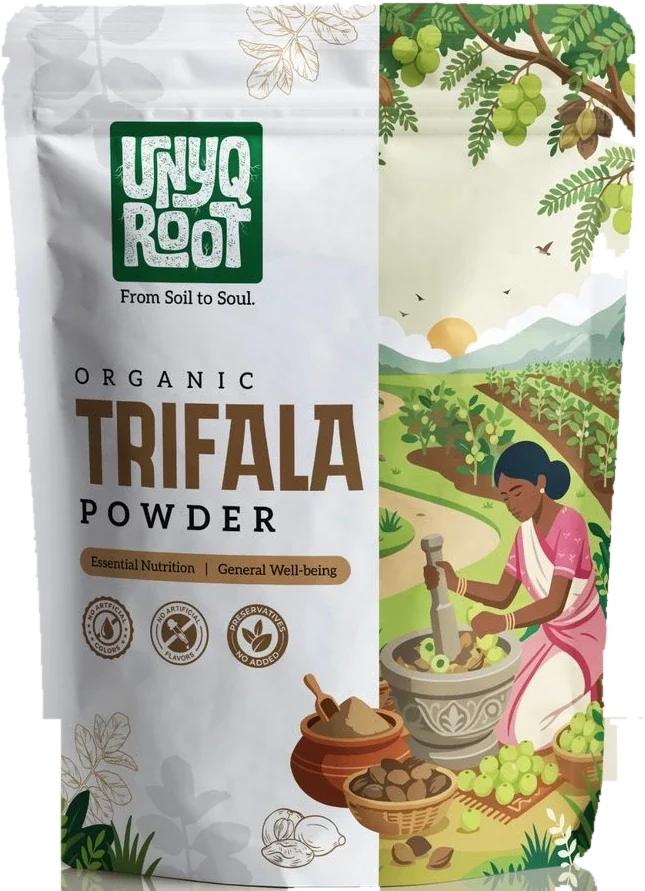
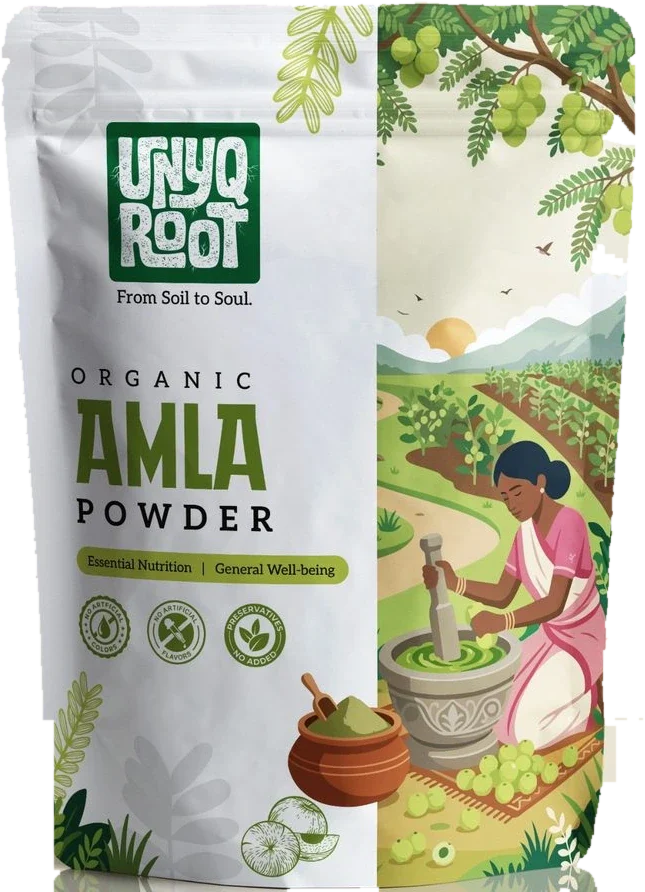
Triphala means "three fruits" in Sanskrit. It is a classical Ayurvedic formulation made from three dried fruits in roughly equal parts: amalaki (amla, or Indian gooseberry), bibhitaki (bahera), and haritaki (harad). Each fruit is valued for its own qualities, and together they are considered one of the most balanced, everyday tonics in Ayurveda.
Rather than acting on a single function, triphala is traditionally used to support the whole digestive process: appetite, regular elimination, and the body's natural rhythm of moving food through and waste out. It also carries naturally occurring plant compounds and vitamin C from the amla portion, which is one reason it is taken as a general wellness support and not only for the gut. Crucially, triphala is not a fibre supplement. It is a concentrated blend of fruit powders, so you take it in small amounts.
What Psyllium Husk Actually Is
Psyllium husk is the outer coating of the seeds of the Plantago ovata plant, grown widely across Gujarat and Rajasthan. It is almost pure soluble fibre. When it meets water, it swells into a soft gel many times its original size. That gel is the whole point: it adds bulk and softness to stool, helps it hold moisture, and gives the gut something to move along smoothly.
Because it is fibre rather than a herb, psyllium does not have an active compound that changes how your digestion behaves. It works through simple physics and water. This also means it must be taken with plenty of liquid, every single time, without exception. Taken dry or with too little water, it can do the opposite of what you want and feel uncomfortable going down.
How They Work: The Core Difference
This is where the two part ways, and it is the most useful thing to remember.
- Psyllium husk is a bulk-forming fibre. It works mechanically. It absorbs water, forms a gel, and helps create softer, bulkier stool that is easier to pass. Its effect is largely the same from the first dose, and it stays in the gut rather than being absorbed into the body.
- Triphala is a herbal blend that supports digestion more broadly. It is taken to encourage the gut's own regular rhythm and to support comfortable, complete elimination over time. Many people find its benefits build over a few weeks of consistent use rather than from a single dose.
- Fibre vs formulation: with psyllium you are adding a raw material (fibre) the modern diet often lacks. With triphala you are supporting a process. They solve overlapping problems through completely different mechanisms.
A simple way to hold it in mind: psyllium husk changes the stool, while triphala supports the system that produces it. That is why some people use them at different times, and a few use them together.
How to Use Triphala
Triphala is most often taken as a powder (churna) or in tablet or capsule form. The traditional and most common way is the powder, usually at night.
- 1Start with a small dose. A typical amount is 3 to 5 grams (roughly half to one level teaspoon) of triphala powder once a day.
- 2Take it at night, about 30 to 60 minutes after dinner or at bedtime, which is the classic timing for supporting next-morning regularity.
- 3Mix the powder into warm water and let it sit for a minute, or stir it into a little warm water and drink it down. Some prefer it with a teaspoon of honey once the water has cooled, or with warm water alone.
- 4Give it time. Triphala is generally used as a steady, daily support, and many people notice the most benefit after two to four weeks of consistent use.
- 5If you use tablets or capsules instead, follow the dosage on the pack; one to two tablets at night is common, but products vary in strength.
UNYQROOT's triphala is made from organically grown fruits, sun-conscious processing, and nothing else added, which matters for something you take daily and over the long term. The taste is famously bitter and astringent, which is normal and considered part of how it works; warm water and a little honey make it easy to take.
How to Use Psyllium Husk
Psyllium is simple, but the technique genuinely matters because of how much water it pulls in.
- 1Use about 5 to 10 grams, or 1 to 2 teaspoons, once a day to start. You can take it once or, if needed, split it across the day.
- 2Stir it into a full large glass of water (at least 250 ml) and drink it immediately, before it turns to gel in the glass.
- 3Follow it with a second glass of water. This is the step most people skip, and it is the most important one.
- 4Stay well hydrated through the rest of the day. Psyllium needs water to do its job and to stay comfortable.
- 5Take it away from meals if you want it purely for regularity, or with meals if you are using it to add fibre to your diet. Keep any medicines at least 1 to 2 hours apart from psyllium, since fibre can affect how some medicines are absorbed.
Never take psyllium husk dry or with only a sip of water. Always pair it with a full glass, then drink more after. This single habit is the difference between psyllium feeling helpful and feeling unpleasant.
When to Choose Triphala
Triphala tends to suit people who are looking for ongoing, everyday support rather than a quick mechanical fix. Consider it when:
- You want a daily wellness habit that supports digestion and regular elimination over the long term.
- You like the idea of a traditional, whole-fruit formulation rather than an isolated single ingredient.
- You also value the broader supportive qualities triphala is known for, including the naturally occurring antioxidants and vitamin C from its amla portion.
- You prefer a small nightly dose over carrying and mixing fibre during the day.
- You are building a steady routine and are comfortable giving it a few weeks to settle in.
When to Choose Psyllium Husk
Psyllium is a strong choice when the issue is closely tied to fibre and stool texture. Consider it when:
- Your diet is genuinely low in fibre and you want a clean, neutral way to add some.
- You want softer, bulkier, easier-to-pass stool and a fairly direct, predictable effect.
- You prefer something with essentially no taste that mixes into water easily.
- You are looking for daytime support you can take with or around meals.
- You want a single, simple ingredient with a very well understood mechanism.
Triphala asks for patience and rewards consistency. Psyllium asks for water and rewards good technique. Match the one you choose to the habit you can actually keep.
Can You Take Them Together?
Yes, many people do, because they work on different fronts. A common pattern is psyllium husk with water during the day for fibre and bulk, and triphala at night for steady, long-term digestive support. If you combine them, a few sensible rules apply: keep them spaced apart by an hour or two rather than mixed in the same glass, drink extra water throughout the day since both benefit from good hydration, and introduce them one at a time so you can tell how your body responds to each. Start low with both, and only build up slowly.
Quality and Sourcing: Why It Matters Here
With anything you take daily, what is not in the product is as important as what is. For psyllium, look for husk that is clean, free of grit, and high in actual fibre content rather than padded with seed dust. For triphala, the quality of the three fruits, how they are dried, and whether anything has been added are what separate a good powder from a forgettable one. UNYQROOT's approach of organically grown sourcing with no fillers, in keeping with the brand's "From Soil to Soul" promise, is built around exactly this kind of everyday, long-term use.
Safety and Sensible Use
Both are well tolerated by most healthy adults when used at normal amounts, but a few points are worth keeping in mind. Start with a low dose of either one and increase slowly; jumping straight to a large amount of fibre, in particular, can cause bloating or gas while your gut adjusts. Drink enough water, especially with psyllium. If you ever feel that food or liquid is not going down comfortably, stop and seek advice.
These are wellness supports, not treatments for any medical condition. If you are pregnant or nursing, are taking any medication, have a known swallowing difficulty, or have a diagnosed digestive condition, talk to your physician or a qualified Ayurvedic practitioner before starting either one. Keep psyllium and any prescription medicines at least an hour or two apart, and discontinue use and consult a doctor if you notice any persistent discomfort.
The Bottom Line
Triphala and psyllium husk are both honest, time-tested ways to look after your digestion, and neither is better than the other in the abstract. The right choice depends on what you are after. If you want a daily, whole-fruit support that works with your body's rhythm over time, triphala is the natural fit. If you want a simple, neutral fibre that adds bulk and softness to stool, psyllium husk is the clearer answer. And if your needs span both, there is no reason you cannot use each for what it does best, with good hydration and a little patience tying it all together.
Triphala ને તમારી દિનચર્યામાં ઉમેરો
ઉત્પાદન જુઓવારંવાર પૂછાતા પ્રશ્નો
No. Triphala is a herbal blend of three dried fruits (amla, bibhitaki, and haritaki) that supports digestion broadly over time. Psyllium husk is a single soluble fibre that adds bulk and moisture to stool through a mechanical, water-based effect. They are different products that solve overlapping problems in different ways.